Documented history
Homes & Settlements
Explore the communities, dwellings and landscapes in which people lived.
Read the introduction →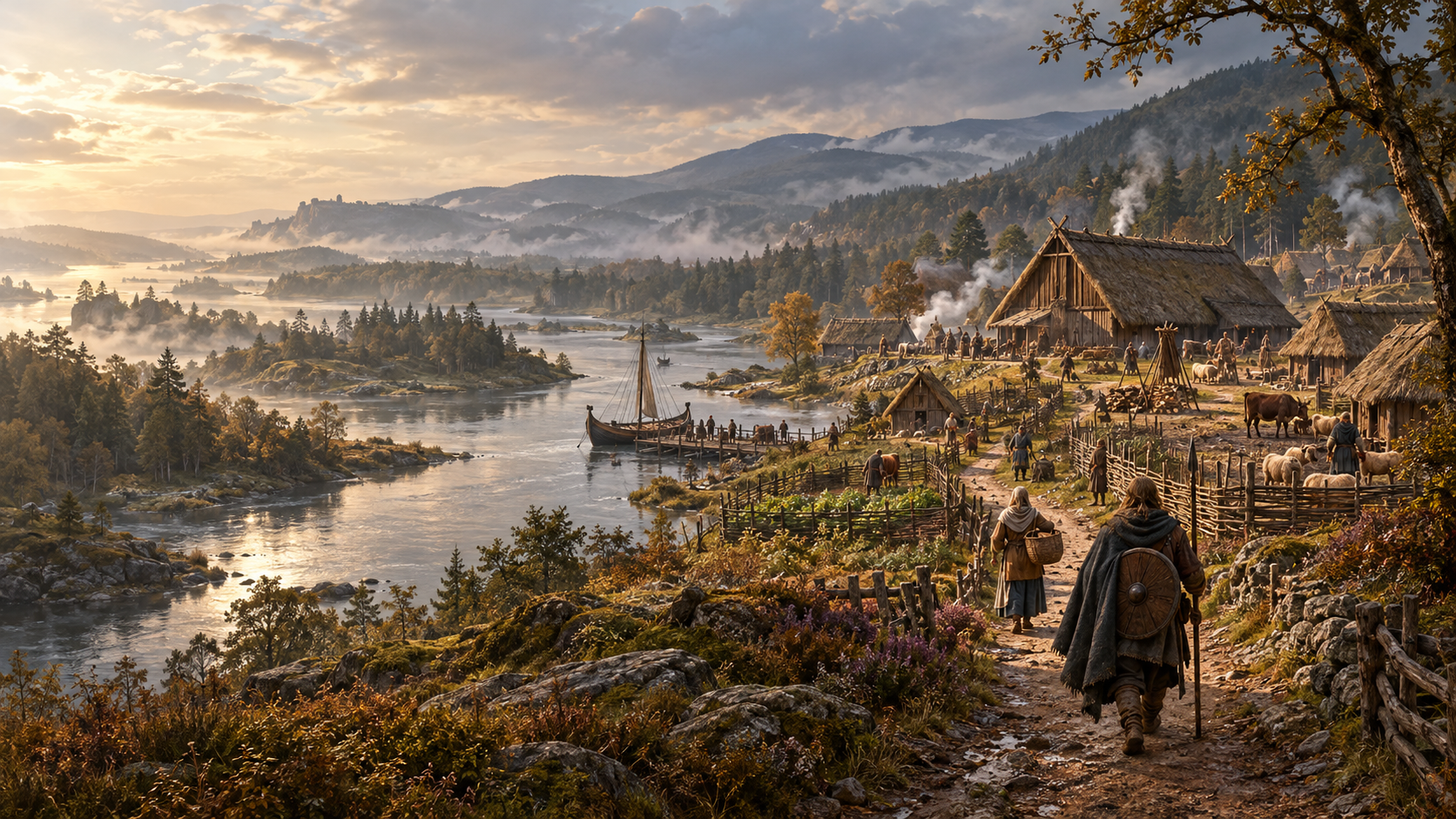
Beyond the chronicles, a world of rivers and forests, households and journeys, histories and remembered stories.
Enter the World ↓History • Landscape • Imagination
The Goths were not simply wanderers on the edge of Rome. They lived in communities, cultivated land, traded, moved, fought, negotiated and forged new kingdoms.
This is a world explored through people, dwellings, objects, and places.
I / Explore the Landscape
Select a glowing location to discover more.
+
+
+
+
II / Discover the World
Documented history
Explore the communities, dwellings and landscapes in which people lived.
Read the introduction →Documented history
Rivers were routes of exchange and strategic boundaries. The Danube played an important role in Roman-Gothic relations.
Discover more →History & reconstruction
Encounter clothing, identity, migration, warfare and the shifting politics of the Roman frontier.
Discover more →III / The Historical Archive
Images of the Goths often begin with armies at the frontiers of the Roman Empire or the movement of peoples across a map. These are important parts of the story, but they are not the whole of Gothic life.
Communities described as Gothic also included farmers, families, craftspeople, and political leaders. Their lives unfolded in settlements and cultivated landscapes as well as on roads and battlefields.
The peoples later known as Goths developed within a changing world north of the Roman Empire. Archaeological material associated with the Wielbark and Chernyakhov cultures is relevant to this story, although an archaeological culture cannot be equated neatly with a single named people.
During the third and fourth centuries CE, Gothic-speaking and Gothic-identified groups interacted with imperial territories through conflict, diplomacy, and exchange. Later upheavals north of the Danube helped set the stage for major movements into Roman territory.
To explore the Gothic world is therefore to ask about the daily and the monumental together: what people made, how communities sustained themselves, where they lived, and how they understood belonging. The journeys matter, but so do the places people called home.
Mailing list registration is not yet active.